














Why the First Year in care Matters Most
For many domiciliary care providers, the hardest staff to retain aren’t those who have been in the role for years, they’re the ones who have only just started.
Across the care sector, a significant proportion of turnover happens within the first year in care. New care workers leave before they’ve had the chance to build confidence, form relationships with clients, or feel truly part of the organisation. For many providers, this creates a costly cycle of recruitment, induction, and rota disruption.
Retaining new care workers isn’t just about reducing recruitment spend. High early turnover affects continuity of care and puts pressure on experienced staff and can negatively impact service quality and CQC outcomes. The good news is that first year attrition is often preventable.
At Homecarers Care Services we understand where and why new starters disengage, and by putting the right support in place from day one, we make all new staff feel supported, confident and part of our team
Where many Domiciliary Care Providers Lose New Starters
Retaining new care workers requires looking honestly at the early employee experience. Problems rarely stem from a single issue; instead, they build gradually across the first year in care.
Weeks 1–4: Overwhelm and Unclear Expectations
The first month is critical. New starters are absorbing large amounts of information while trying to apply it in real-life care situations.
Common challenges include:
- Information overload during induction
- Inconsistent shadowing experiences
- Fear of making mistakes when working alone
- Unclear expectations around rotas, travel, and communication
Even motivated care workers can feel anxious and underprepared during this stage. Without reassurance and regular check-ins, confidence can quickly deteriorate. At Homecarers Care Services, we make it our mission to combat this
Months 2–6: Isolation and the Confidence Dip
Once induction ends, many new carers experience a noticeable drop in support. They move from structured learning to lone working, often without a clear safety net.
At this stage, providers often lose staff due to:
- Reduced contact with managers
- Feeling isolated while working alone
- Increasingly complex care packages
- Difficulty raising concerns or asking for help
This is a crucial period for retention. We provide proactive support, to avoid small frustrations turning into resignation decisions.
Months 6–12: The “What’s Next?” Moment
By the time a care worker reaches six months, they’re usually competent and reliable but they’re also evaluating their future.
Questions they may be asking include:
- Is there progression here?
- Will my role ever change?
- Am I developing, or just repeating tasks?
We have a range of training and career progression opportunities accessible to our care staff.
What a Strong Domiciliary Care Introduction Really Looks Like
A well-designed induction is one of the most effective tools for retaining new care workers. However, induction should be seen as a process, not a one-off event.
Structured, Phased Induction
Rather than front-loading information, high-retention providers spread learning over time:
- Core training first
- Gradual increase in responsibility
- Ongoing refreshers in the first 3–6 months
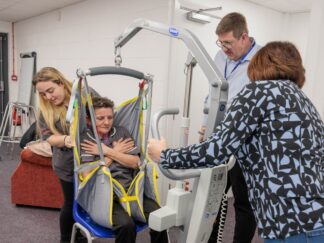
Our approach reduces overwhelm and supports confidence-building with our in house 4 day induction training lead by our fabulous trainer, Donna in our Liverpool office, or our dedicated training partners in Cheshire and Manchester.
Quality Shadowing Experiences
Shadowing should be consistent and purposeful, to achieve this, we:
- Pair new starters with experienced, supportive carers
- Allow time for questions and reflection
- Avoid rushed or understaffed shadow shifts
Positive early experiences can assist new carers in gaining confidence and refining skills.
Clear Expectations from Day One
We prioritise helping carers to understand:
- How rotas are planned
- Who to contact for support
- What “good” looks like in their role
- How feedback and supervision work
Clarity reduces anxiety and builds trust early on.
Spotting Early Warning Signs
Disengagement and unhappiness often shows up subtly:
- Increased sickness
- Reduced responsiveness
- Changes in attitude or reliability
Our managers and coordinators are trained to recognise and address these signs early and compassionately to prevent turnover.
Supporting care workers through their first year in care isn’t just about retention figures, When new starters feel confident, supported and valued, they are better able to build trusting relationships, provide consistent, compassionate care and truly understand the people they support. For care staff, strong early support reduces anxiety, builds confidence and creates a sense of belonging, leading to higher job satisfaction and long‑term commitment. By investing in our carers from their very first shift, we create stability, continuity and positive outcomes for everyone involved, from our teams to the service users who rely on us every day.
To begin a rewarding career in care, please click here.
Social Media
To read more of our news, click here.
To keep up to date with what we get up to, please visit our socials by clicking the links below.
Liverpool
Cheshire
Manchester
See Also








Our partners